Traceable
Every shipment can be tied back to test data, compliance notes, and production controls for optical transceiver accountability.
Founded in San Jose in 2003, Finisar grew around a simple operating belief: the most useful optical supplier is the one that understands what happens after the purchase order. Network teams do not only need a module label. They need a partner who can explain insertion loss, return loss, wavelength selection, deployment temperature, replacement logic, and the practical risk hiding in a long fiber path. That mindset shaped our work from early 10G LR programs to GPON access deployments, 100G coherent planning, and today’s 400G ZR+ readiness conversations.
Our team of 78 engineers works with carrier, ISP, and enterprise infrastructure groups that value conservative documentation and steady support. We serve more than 50 countries through regional logistics and channel partners, while keeping traceable test data close to every customer conversation.
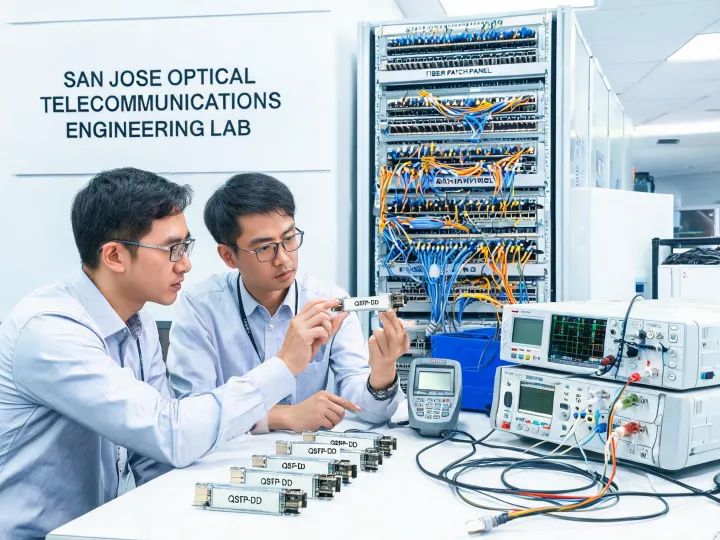
Finisar’s first customers were not chasing novelty. They were solving practical optical network problems: how to sustain Ethernet growth across constrained fiber, how to keep replacement modules consistent across regional sites, and how to write acceptance criteria that a field crew could use at 2:00 a.m. The company responded by building product and support routines around test discipline. Thermal cycling, accelerated aging, vibration checks, serial traceability, and clear engineering notes became part of the customer experience.
“A reliable optical component is more than an object in a cage. It is a documented promise across the route, the rack, the NOC, and the maintenance window.”
That approach still guides the company. When a broadband team asks about a GPON OLT path, we discuss splitter ratios and connector cleanliness. When a metro carrier asks about a DWDM system, we discuss dB margin and span assumptions. When a datacenter fabric team asks about 400G optics, we discuss module temperature, airflow, EEPROM behavior, and operational replacement plans. The product changes with every generation; the partnership habit does not.
Every shipment can be tied back to test data, compliance notes, and production controls for optical transceiver accountability.
Our guidance is written in Gbps, dB, km, wavelength, and form factor language that engineering and procurement teams can act on.
We favor long-term compatibility, replacement planning, and field support over claims that cannot survive a real network event.
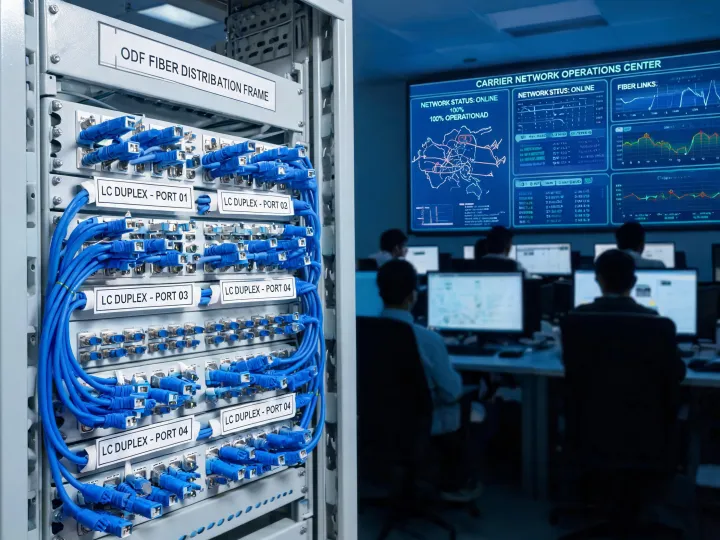
Finisar’s community impact is specific to telecom work. We support training for cleaner fiber handling, clearer splicing records, and better optical power documentation because small operational habits protect large networks. Outside plant crews, NOC engineers, compliance teams, and procurement managers all see different parts of the same link. Our role is to help those groups share the same facts before the work becomes urgent.
The company also maintains environmental controls that extend field life. Modules that remain in service longer reduce emergency freight, disposal, and avoidable truck rolls. Repairable documentation, recyclable packaging, and RoHS / REACH compliance are part of how a dependable optical supplier contributes beyond the invoice.
Share the link type, traffic target, fiber span, connector plan, and compliance region. We will help you turn it into a dependable engineering conversation.